

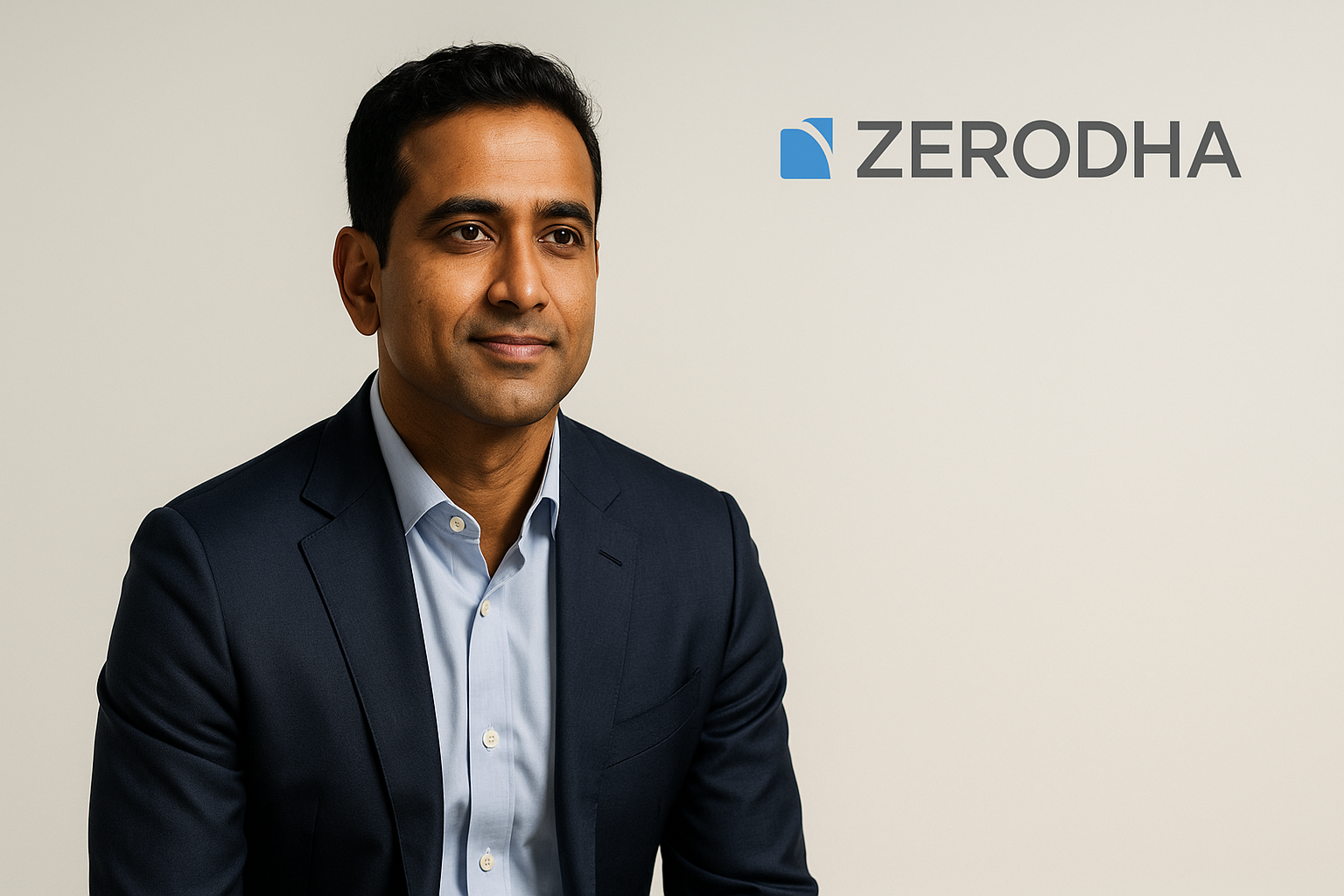
Long before he became a fintech pioneer, Nithin Kamath was a trader. In his college years, he was already fascinated by the stock market—buying, selling, and often losing money. The thrill of trading and the lessons from failures shaped his vision: finance should be simple, transparent, and accessible to all, not just the elite.
Born in 1979 in Shivamogga, Karnataka, Nithin grew up in a middle-class family. His father worked in the Canara Bank, and his mother was a veena teacher. Like many young Indians, Nithin dreamed big, but unlike most, his passion for trading began when he was just 17. The early exposure to finance sparked what would later become a revolution.
After completing his engineering degree, Nithin continued trading while also working at a call center to support himself. The double life wasn’t easy—days at the job, nights in the stock market—but it gave him real-world experience in discipline, resilience, and risk-taking.
As a trader, Nithin saw firsthand how outdated and expensive India’s brokerage systems were. High fees, complex interfaces, and lack of transparency made investing intimidating for newcomers. He knew the system needed an overhaul—investing had to be democratized.
In 2010, Nithin, along with his brother Nikhil Kamath, launched Zerodha. The name was a mix of “Zero” and “Rodha” (Sanskrit for barrier)—symbolizing their mission: zero barriers to investing. Unlike traditional brokers, Zerodha offered discount brokerage with low fees and an easy-to-use online platform.
In the early days, skeptics dismissed Zerodha as “too cheap to be true.” Investors hesitated to trust a new-age broker without physical branches. With no external funding, Nithin and his brother bootstrapped the business, focusing on word-of-mouth growth, transparency, and customer-first innovation.
As India’s digital wave surged, Zerodha’s simple, low-cost model clicked. The launch of Kite, its sleek trading platform, made investing accessible even for first-timers. By 2020, Zerodha had become India’s largest stockbroker, with millions of users and record daily trades.
What makes Zerodha unique is that it never raised venture capital. While most startups burned cash chasing growth, Nithin stayed true to his vision of building sustainably. Today, Zerodha is valued in billions—and it remains entirely bootstrapped.
Zerodha didn’t just build a company; it changed India’s investing culture. It empowered small investors, encouraged financial literacy, and brought stock market participation to the masses. What was once intimidating became approachable.
Solve your own pain point. Zerodha was born out of Nithin’s frustrations as a trader.
Sustainability over hype. Growth without external funding proved a powerful model.
Keep it simple. Finance doesn’t have to be complex; clarity wins trust.
At Pioneer, we look at founder journeys not just as business stories, but as lessons in vision and execution. Research compiled by the Mage Marketer team highlights that Nithin Kamath’s real success wasn’t only in launching a brokerage. It was in reimagining stock trading as simple, transparent, and accessible for everyone. That shift in mindset turned Zerodha into more than just a platform—it became a movement that opened investing to millions. The takeaway for entrepreneurs? Brands grow faster when people feel a genuine bond with what you offer.
Nithin Kamath’s story is proof that revolutions don’t always start with big money—they start with big ideas. By breaking barriers in investing, he created a fintech movement that empowers millions. His message to future entrepreneurs is clear: “Don’t chase funding, chase impact. Build something that solves a real problem.”


