

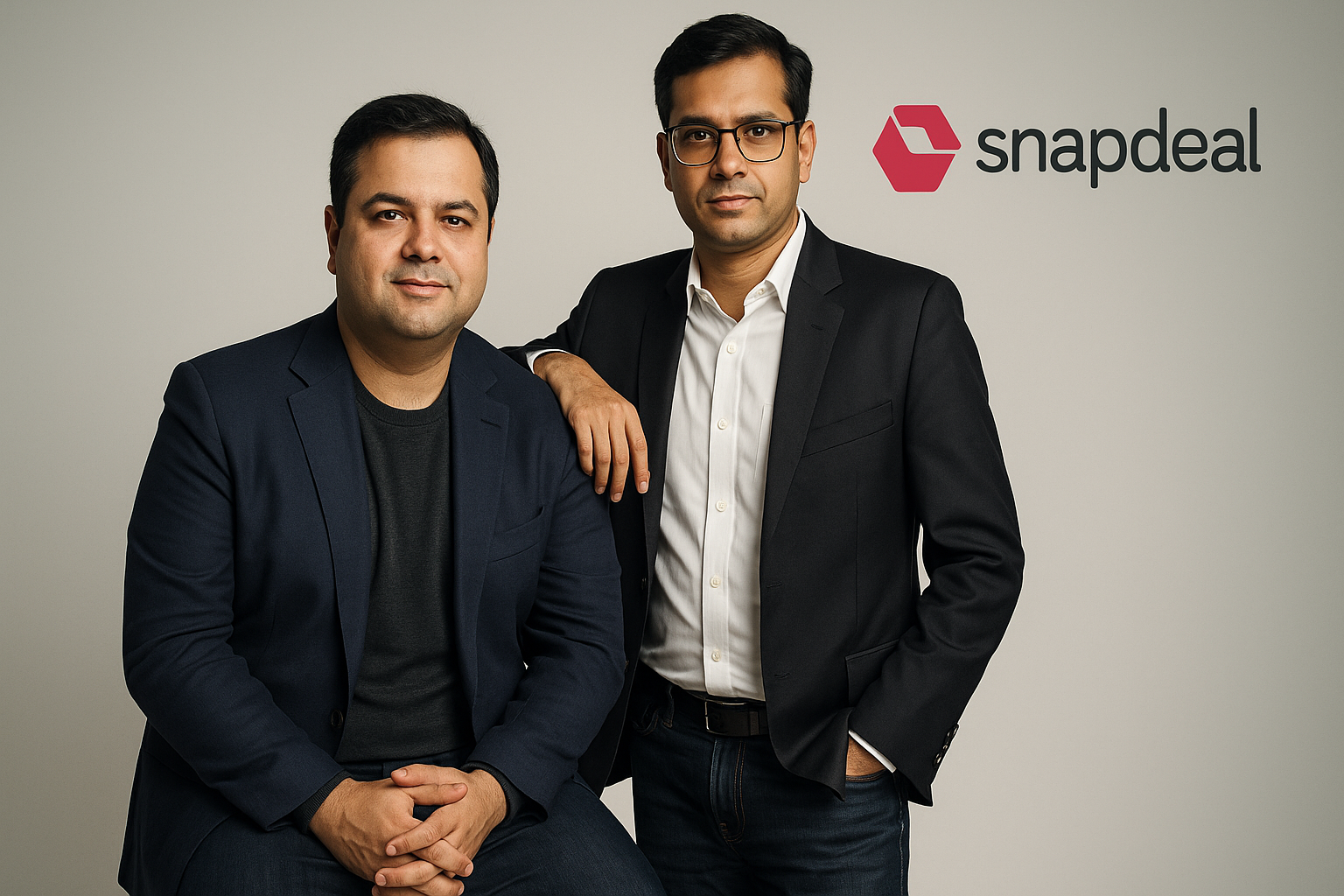
Some of the most successful businesses begin with friendship—and that’s exactly how Snapdeal was born. Kunal Bahl and Rohit Bansal, childhood friends from Delhi, shared not just a bond but also a dream: to build something meaningful in India’s rising internet economy. What started as a small venture would go on to become one of the country’s earliest e-commerce powerhouses.
Kunal Bahl grew up in Delhi and later went to the Wharton School, University of Pennsylvania. He was denied an H-1B visa in the U.S., a setback that pushed him back to India. Rohit Bansal, on the other hand, studied engineering at IIT Delhi. Both came from middle-class families, where ambition was encouraged, but risk-taking wasn’t always the norm. Yet, their shared belief in India’s digital future set them apart.
In 2010, the duo launched MoneySaver, a daily deals and discount coupon site, inspired by Groupon’s rise in the West. Soon, they rebranded it as Snapdeal, offering local deals on restaurants, salons, and entertainment. For urban youth looking for bargains, it was an instant hit.
While coupons gave them a start, Kunal and Rohit saw a bigger opportunity—online retail. In 2012, they pivoted Snapdeal into a full-fledged e-commerce marketplace, connecting sellers with buyers across India. Suddenly, Snapdeal became a competitor to giants like Flipkart and later, Amazon.
The journey wasn’t smooth:
Fierce Competition: Battling deep-pocketed rivals like Amazon and Flipkart.
Funding Pressures: Scaling in e-commerce required massive capital.
Operational Struggles: Managing logistics, returns, and customer trust was a steep learning curve.
At one point, Snapdeal was India’s second-largest e-commerce player, valued at billions. But rapid growth also brought challenges that tested the co-founders’ resilience.
Snapdeal became known for:
Wider Reach: Bringing small sellers from across India onto a digital platform.
Affordable Choices: Focusing on value-for-money products for middle-class consumers.
Funding Boosts: Securing investments from global giants like SoftBank and eBay.
These milestones positioned Snapdeal as a serious force in India’s e-commerce boom.
By 2016–17, Snapdeal faced a rough patch. Intense competition and aggressive discount wars led to heavy losses. The company nearly merged with Flipkart in a high-profile deal, but Kunal and Rohit stood firm, choosing independence over acquisition.
Instead of chasing luxury buyers, Snapdeal pivoted again—this time to focus on value e-commerce, catering to India’s heartland. Their new approach emphasized affordable, quality products for price-conscious shoppers in Tier 2 and Tier 3 cities. This strategy gave Snapdeal a fresh identity in a crowded market.
Even though it wasn’t the final winner of the e-commerce race, Snapdeal played a pioneering role. It brought thousands of small businesses online, inspired consumer trust in digital shopping, and proved that India was ready for large-scale e-commerce.
Adaptability is key. From coupons to e-commerce to value retail, they kept evolving.
Stay true to vision. Even when merger temptations arose, they stuck to independence.
Middle India matters. Snapdeal’s focus on affordability tapped into a massive consumer base.
At Pioneer, we look at founder journeys not just as business stories, but as lessons in vision and execution. Research compiled by the Mage Marketer team highlights that Snapdeal’s real success wasn’t only in building an e-commerce platform. It was in democratizing online shopping by focusing on affordability and access. That emotional connection with India’s value-conscious buyers made Snapdeal a trusted name. The takeaway for entrepreneurs? Brands grow faster when people feel a genuine bond with what you offer.
Kunal Bahl and Rohit Bansal’s journey with Snapdeal isn’t just about wins or losses—it’s about resilience, reinvention, and the courage to stand tall in one of the world’s most competitive markets. Their story reminds us: “In business, survival and reinvention are as powerful as success.”


