

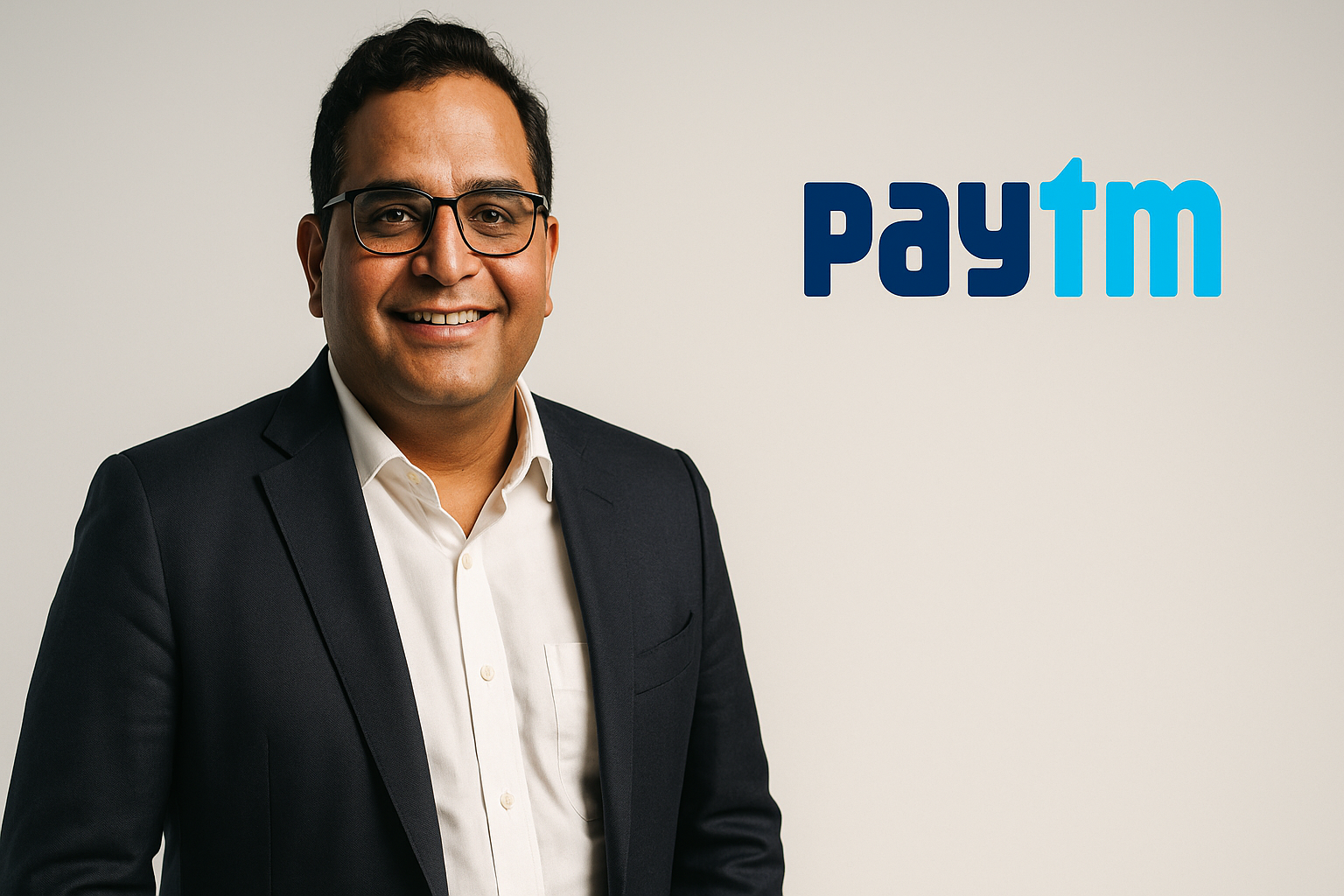
From a small town in Uttar Pradesh to the helm of one of India’s most iconic fintech brands, Vijay Shekhar Sharma’s story is nothing short of remarkable. Born in 1978 in Aligarh, he was the son of a schoolteacher. With limited resources but limitless ambition, he believed technology could change lives—and he was determined to be part of that change.
Vijay was a bright student, so bright that he entered Delhi College of Engineering (DCE) at just 15. But there was a challenge—classes were in English, a language he barely spoke. For a while, he struggled to understand lectures, lagging behind his peers. Instead of giving up, he taught himself English by reading newspapers and listening to radio shows. This grit became a defining trait of his journey.
While still in college, Vijay explored his love for coding and the internet. He created Indiasite.net, one of India’s early websites, which he later sold for a handsome amount. That money became seed capital for his next venture—One97 Communications, a company that would eventually give birth to Paytm.
In the late 2000s, when smartphones were slowly entering India, Vijay saw the future: digital wallets and mobile payments. In 2010, he launched Paytm (Pay Through Mobile), starting with simple services like prepaid recharges. What looked like a niche service soon became a movement.
Vijay’s journey was far from smooth:
Skepticism: Investors and consumers doubted whether Indians would trust digital money.
Infrastructure Gaps: Limited smartphone penetration and patchy internet made scaling tough.
Personal Struggles: Vijay often recalls times when he couldn’t even pay his office rent.
But resilience and relentless belief in India’s digital future kept him pushing forward.
The turning point came in November 2016, when India’s government demonetized ₹500 and ₹1000 notes overnight. As millions scrambled for cash alternatives, Paytm became the go-to solution. Suddenly, shopkeepers, cab drivers, and small vendors across India were saying, “Paytm Karo.”
From recharges to bill payments, ticket bookings to shopping, Paytm quickly expanded its services. Its QR code-based payments made it accessible to even the smallest street vendor. Soon, Paytm wasn’t just an app—it was a verb, a habit, and a revolution in India’s financial ecosystem.
In 2021, Paytm went public in one of India’s biggest IPOs. While the listing faced market turbulence, Vijay’s vision of a cashless India continued to guide the company. Beyond payments, Paytm expanded into financial services, insurance, wealth management, and even digital banking.
Paytm democratized digital payments, bringing financial inclusion to millions who had never used a bank card. From urban malls to rural kirana shops, Paytm became a bridge to India’s digital economy.
Turn weaknesses into strengths. Language barriers didn’t stop him; they fueled his determination.
See the future early. Paytm was launched when few believed in digital wallets.
Resilience wins. Even in personal and financial struggles, Vijay never lost sight of his vision.
At Pioneer, we look at founder journeys not just as business stories, but as lessons in vision and execution. Research compiled by the Mage Marketer team highlights that Vijay Shekhar Sharma’s real success wasn’t only in building a payments app. It was in making digital money feel simple, trusted, and accessible to every Indian. That emotional connection turned Paytm into a verb—“Paytm Karo”—and made it a household name. The takeaway for entrepreneurs? Brands grow faster when people feel a genuine bond with what you offer.
Vijay Shekhar Sharma’s journey embodies the spirit of India’s startup wave—hustle, vision, and grit. From Aligarh to the global fintech stage, his message is clear: “Dream big, stay persistent, and don’t wait for the perfect time—create it.”


